How Cafam Provides Better Education Opportunities in Bogotá with Innovation and Technology
7 min read Impactus Ventures

Cafam plays an important role in building inclusive education for children and young people. Learn about its programs, support, and the way it has innovated in teaching and learning processes.
Latin America is one of the regions with the highest poverty rates in the world. To get an idea of the size of the problem, consider that in Colombia alone there are 21 million people living in poverty, according to data from the National Administrative Department of Statistics (Dane).
This situation limits access to education for girls, boys and young people, since there are low-income areas where family income is not enough for the youngest in the household to get decent, timely training and a professional career.
Fortunately, there are organizations like Cafam that are addressing one of the most relevant social problems in Latin America with innovation and technology: educational lag.
Cafam is a family compensation fund of Colombian origin whose main function is administering the family subsidy. It has 64 years of experience working for the wellbeing of low-income Colombian families through health, housing, sports, culture, recreation and education services. “In this compensation fund, companies contribute 4% of their workers’ salaries, which becomes services for workers through programs, subsidies and discounts given to workers’ children,” says Jennifer Villarraga, head of the basic and secondary education department at Cafam.
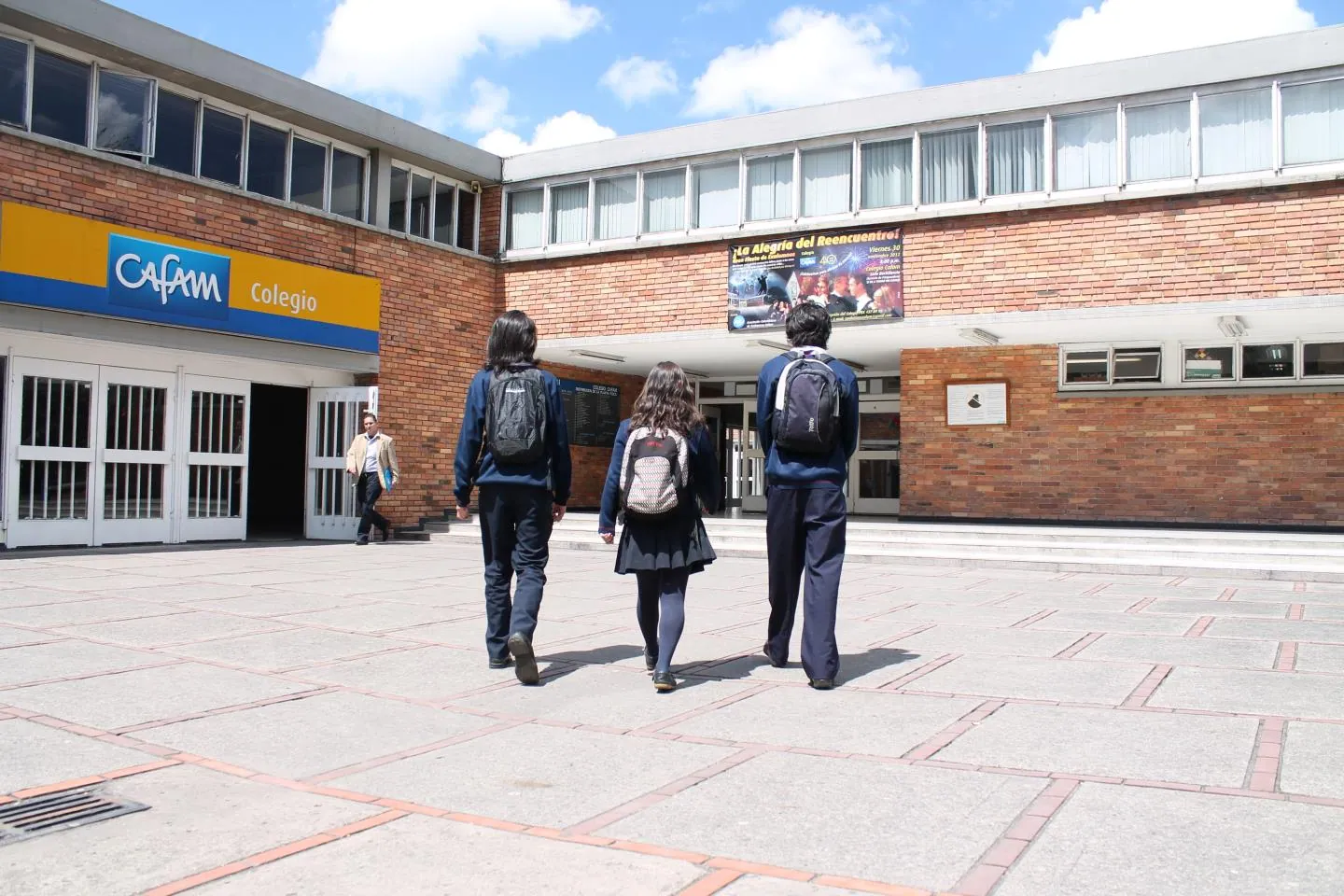
One of the areas where Cafam has had the greatest impact is education, through different support, social programs and an affordable educational offering for the children of workers affiliated with the family compensation fund. For example, it has the Cafam school, which has operated for 50 years and includes four campuses in Bogotá, Colombia, where preschool, primary, secondary and higher education are taught.
Villarraga explains that when they finish their training, students can get a job thanks to a program Cafam set up to place students in the workforce. They can also pursue a technical career at the Center for Education for Work, or even continue their studies at the Cafam university.
It also offers scholarships to make access to higher education easier, and programs such as Creciendo Juntos, which serves pregnant mothers and children under three with health services and comprehensive education. The impact Cafam has achieved is very significant. In 2021 alone, 250 thousand people benefited from the education programs. More than 34 thousand people have gotten a job at a company through the job placement program, and around 6,400 students are being trained in Cafam schools.
Innovation for change
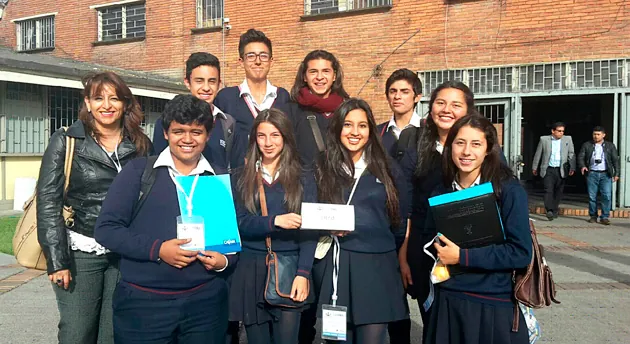
Like other social impact organizations and institutions in Latin America, Cafam plays an important role in building inclusive education for early childhood, where academic training is affordable for all children.
To make an impact on education, Cafam has relied on educational innovation and the use of technology in teaching and learning processes. One of the areas where it has innovated is the educational model behind its students’ training, which is based on the overall and autonomous development of girls, boys and young people.
Villarraga explains that unlike the traditional public education system, Cafam includes special programs that complement the basic Colombian curriculum and let students make smarter decisions in a conscious and structured way.
It also offers specialized workshops at the basic level on technology, product and experience design, architecture, civil engineering, programming, and project management and entrepreneurship, a format that is uncommon in basic education schools. In addition, Cafam is the only school among the compensation funds with a bilingual model (Spanish and English), which allows advanced learning that translates into greater opportunities for students in the job market.
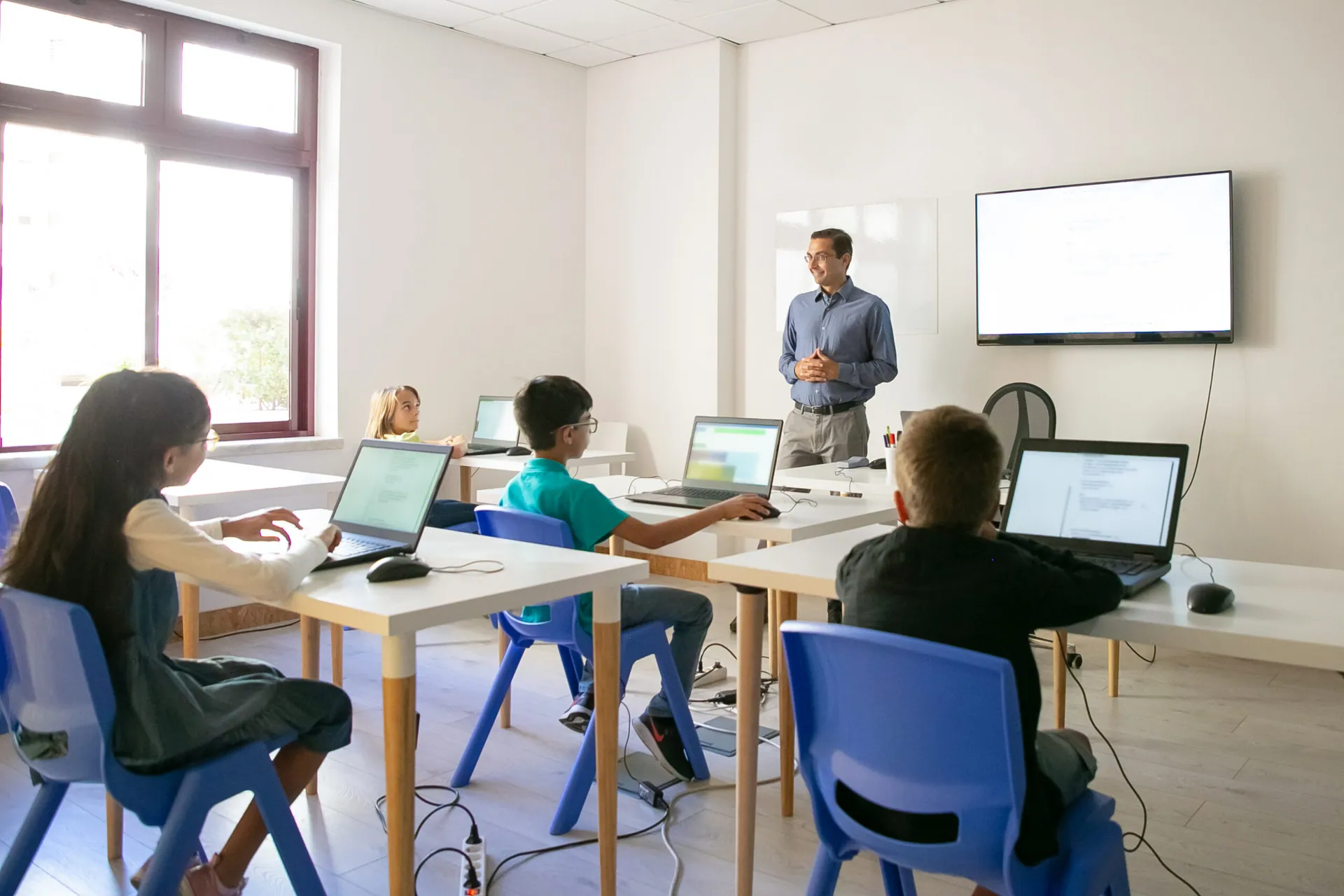
The use of technology has also been a key tool in students’ training, especially in times of Covid-19, with technology platforms that make it easy for teachers to send activities to students. “The pandemic created the need to use technologies so that education would not stop, and to move from in-person to virtual,” says Villarraga.
Just as other educational institutions were forced to implement hybrid education models, Cafam did the same, even before the contingency, with virtual parent meetings to address their children’s school matters.
Technology, a key support in education
And “technology is an ally to make assessment, teaching, learning and outreach to communities easier,” says Villarraga. “Before, teachers had to use real, physical resources to teach, and today they do it through apps, and students can learn thanks to technologies such as virtual reality, augmented reality and gamification,” adds Villarraga.
Without a doubt, technology is a complement to teaching and learning processes, as long as you are “careful with the implementation of platforms so as not to dehumanize education, especially in times of pandemic, and to involve families in the training process of children and young people,” Villarraga points out.
In fact, Cafam stays open to integrating new educational platforms developed by startups in order to enrich the education system and teaching and learning practices. For this reason, it formed a partnership with Impactus Ventures to be an implementation partner of the Childtech Challenge 2022, and for 10 months it will have the chance to work alongside Matific, a startup of Australian origin, on the implementation of technology-based solutions that use artificial intelligence and gamification for learning and teaching numbers, quantities, operations, measurements and geometric shapes for girls, boys and teenagers, and so change the course of education in the coming years toward a more prosperous and equal educational level.
The educational future in childhood and youth
But what will the future of education in Latin America look like, considering the digitalization of teaching and the use of technology to learn? On this point, Villarraga says she is optimistic about what is coming and that change is possible with innovation and technology.
“There is a need to close the gap that exists in vulnerable communities. There it is important to use technology as a resource, but the priority is to meet families’ vital needs. Let’s remember that there is hunger, violence, child labor exploitation, and a lack of protection and love for children,” says Villarraga.
To achieve this, she also considers the participation of the state important, to ensure that children can enter school in zero-hunger conditions, with peace of mind and stability. After that, each country’s challenge, according to Villarraga, will be to have education that is contextualized and fits the needs of each region.
Until that moment comes, Cafam will keep working from its own trench to improve access to education for low-income girls, boys and young people in Bogotá. One of its biggest goals is to achieve a decentralized educational model with opportunities for the whole Colombian population, including the most vulnerable communities.
For now, Cafam’s focus is on the education of childhood and youth at the regional level, although it plans to expand its coverage nationally. In the coming months an education program will be under way for young people and adults who dropped out of high school, with the aim of preparing them to have better job and life opportunities in the future.
This is how Cafam is impacting the lives of girls, boys and young people in Latin America, and like this organization, you can also become a high-impact social leader. We invite you to take part in the first edition of Fellowship Impactus, a high-level program that will help you accelerate the social impact of your organization.
Learn more and apply here: Fellowship Impactus