Enseña por México: The Social Organization Innovating in the Mexican Education System
8 min read Impactus Ventures

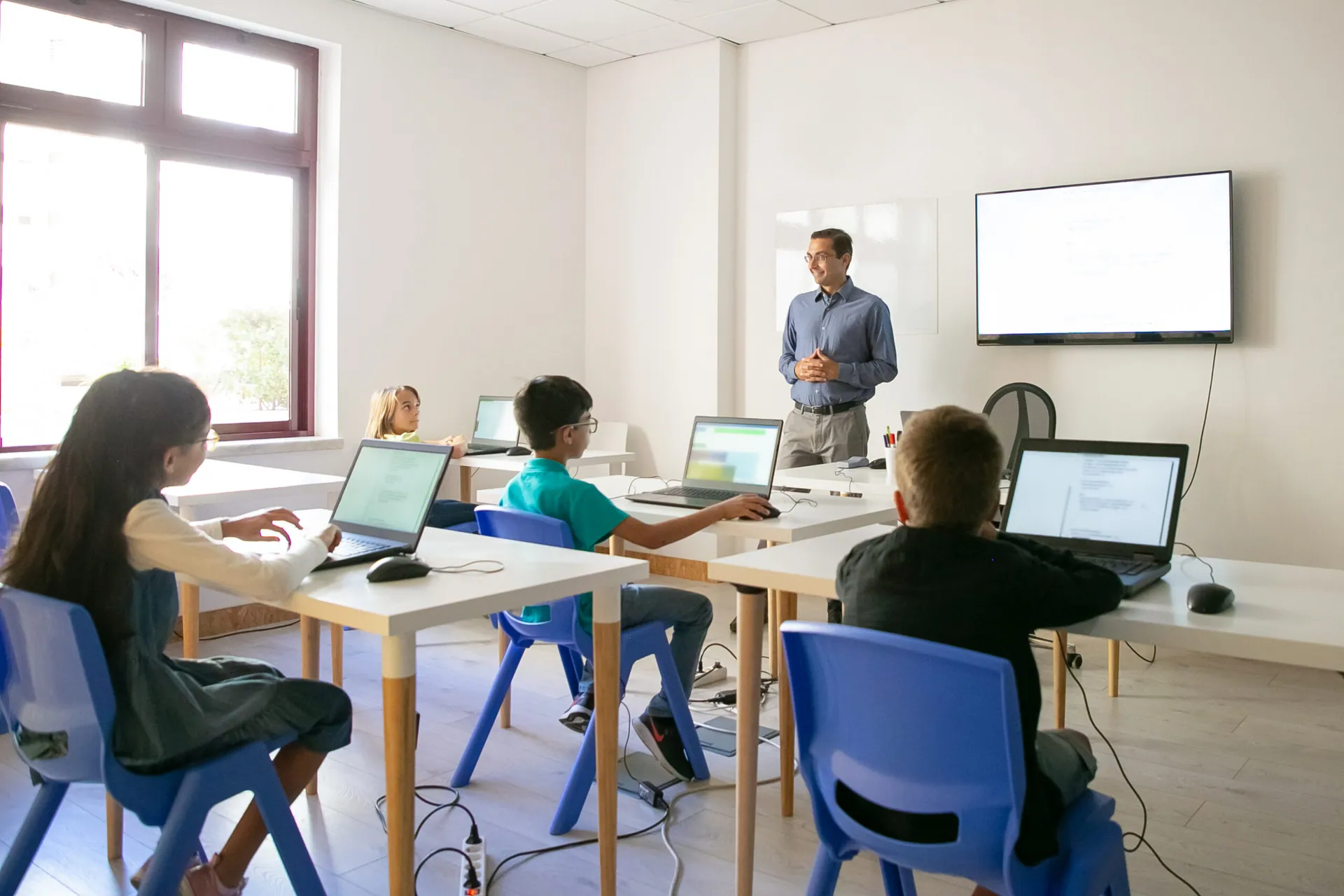
From its role as a social organization and implementation partner of Impactus Ventures’ ChildTech Challenge 2022, this organization is innovating in the Mexican education system. The purpose: for girls, boys and young people to have access to higher-quality education.
When Diana Temalatzi started high school in her hometown of Puebla in Mexico, she thought there were no opportunities for her to become a university graduate. She believed that after finishing school she would be a merchant like her family, and that it was not possible to study for a degree because of a lack of resources.
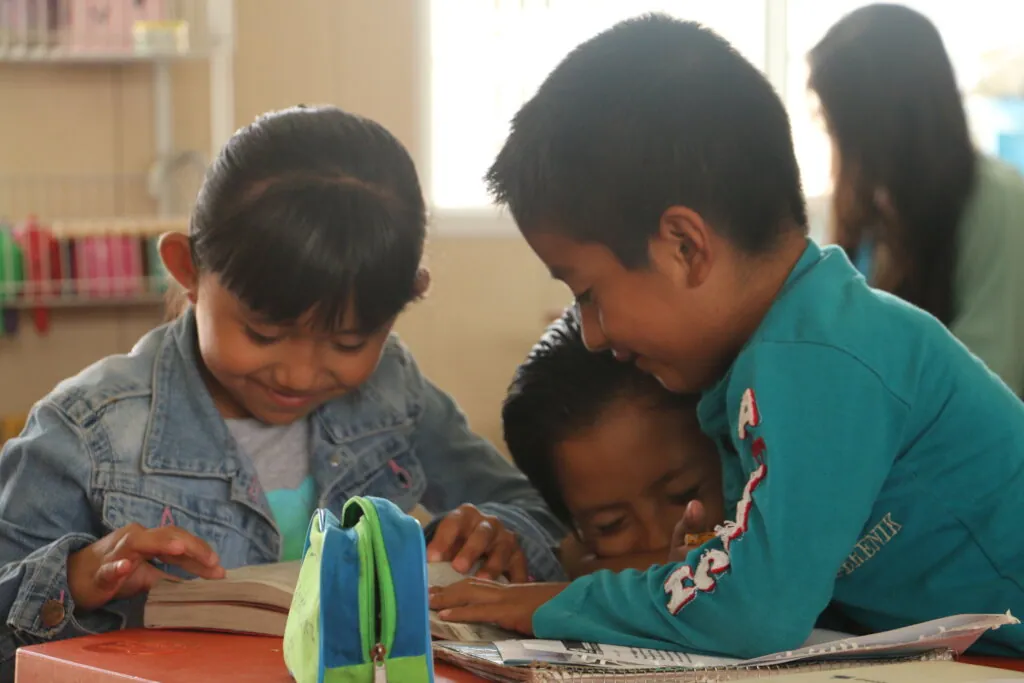
But that changed. Diana received support from the professionals at Enseña por México, a nonprofit social organization that trains early childhood educators and high-performing teachers, giving them the tools they need to teach in kindergartens and public schools in vulnerable communities.
The Enseña por México professionals motivated Diana to keep going; she studied at university and today holds a degree in Modern Languages.
This organization is part of the global Teach For All network, founded in 2007 and involving 60 countries to accelerate progress in education. It has operated in Mexico since 2013 and to date has impacted 134 thousand students, who have had the chance to receive quality education for free.
Unlike the traditional education system, the teaching and learning model provided by Enseña por México is based on a methodology called “Learning one to one,” which makes it possible to teach students in a personalized way. It is an innovation the organization implemented together with Mexico’s public system to raise the quality of students’ learning.
Juan Manuel González, general director of Enseña por México, explains that instead of educators and teachers teaching the same thing to all students, a learning guide is created based on each student’s interests and needs, without leaving aside the basic knowledge they must learn at their age. In this sense, “the Enseña por México professionals become learning facilitators,” says González.
To do this, the organization invites professionals from different careers with a sense of leadership and social commitment to teach in kindergartens, primary, secondary and high schools. All the professionals go through a two-year training program. To date, the organization has trained more than 900 professionals, of whom 656 have successfully completed the program and 260 are currently placed in schools in 12 states of the country.
Innovation + technology: tools for change
Social organizations like Enseña por México play a fundamental role in transforming the education of girls, boys and young people in kindergartens and public schools. Why? They can develop innovative programs, strategies and educational models coordinated with the public system to impact students.
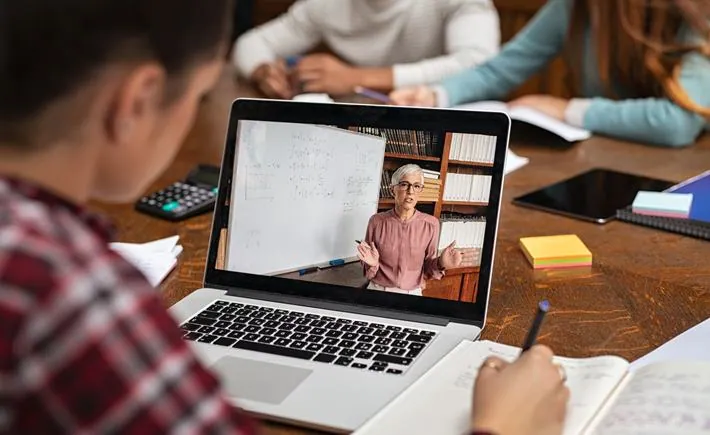
Innovation in both methodologies and the use of technology helps education systems evolve by solving the problems and friction that exist in teaching and learning processes. “Innovation helps organizations increase the impact of their programs and work more efficiently. We have to ask ourselves whether our programs are up to date with the world’s needs, and if they are not, then we need to innovate,” says González.
Innovation has become an ally in fighting educational lag and the skills gap, addressing problems such as school dropout and lack of knowledge. In Mexico alone, more than 24 million people experience educational lag, according to Coneval data. It is also the second economy in Latin America with the highest school dropout, a situation that worsened with the Covid-19 pandemic, according to the Inter-American Development Bank (IDB).
In fact, the pandemic put a generation of Mexican students at risk, since around 628 thousand people between 6 and 17 years old interrupted their studies because of the economic crisis triggered by the contingency, according to IDB data.
The pandemic also made it possible to identify areas of opportunity to innovate with technology and so complement teaching and learning processes. In fact, the use of digital tools for teaching grew 54 percentage points after the pandemic, going from 39% (before the contingency) to 93%, according to the BlinkLearning Global Study on the use of technology in education.
Breaking paradigms, a challenge for social organizations
Implementing innovations in the education system carries the challenge of breaking paradigms and getting all stakeholders to adopt the change the organizations propose.
“Innovating requires a new way of thinking and doing things. If a person is used to getting results with certain methodologies and has not experimented with something different, it is hard for them to value an innovation. When you do something the same way for many years, it becomes part of your mental model,” explains González.
To break that paradigm and get the public system, schools, students and teachers to adopt Enseña por México’s methodology, the organization implemented pilot programs and built synergies with the public sector, one of the helices needed to transform education in any country.
To accelerate social impact, Enseña por México has worked hand in hand with the public sector. Since its creation, the organization has looked for new ways to collaborate to help innovate and, together, improve the country’s education; in this way it fulfills its mission, which is for every child to develop their full potential.
For social organizations that work for the education of girls, boys and young people and plan to implement their programs in the education system, the director of Enseña por México explains that it is necessary to build relationships from the public authority level to the state level, so they know the work being done and how organizations can contribute.
Alliances with principals, teachers, and students’ mothers and fathers are also required. “Organizations are a complementary support to the education ecosystem. We have to see how to add what we have and help generate collective leadership,” González warns.
Startups have opportunities to collaborate with social organizations
What will education look like in the future? Will it be driven by technology? On this, González sees a trend toward continuous use of technology platforms. “With the pandemic we had to adapt to doing many activities through technology. Now we are seeing hybrid models where technology comes in to support the teaching and learning experience.”
Given this outlook, EdTech startups have opportunities to form alliances with social organizations like Enseña por México, to leverage education with innovation and technology. One challenge for startups is “to be backed by research and evidence to show that their methods, processes and technologies will help us achieve the learning students need,” González points out.
So what do they need to integrate their solutions into social organizations’ programs? On this, González recommends that startups “analyze how impact is generated and involve the communities, students or those they want to benefit with their solutions, as well as be willing to adapt their product to our programs,” adds the organization’s executive.
During this new school term, and as part of the ChildTech Challenge 2022, Enseña por México is working with two startups to implement projects with technology-based solutions, impacting thousands of girls, boys and teenagers who are part of the network of kindergartens and schools the Foundation works with.
Together with Storybook, winners of the Overall and Socio-emotional Development Challenge, and through its platform of children’s stories combined with music and relaxation techniques such as meditation and infant massage to encourage sleep, thousands of mothers and fathers of preschool-age children will be able to access technology that lets them contribute to their children’s overall development.
Likewise, together with Beereaders, winners of the Inclusion and Education Challenge, they will contribute in an innovative way to improving the reading and comprehension skills of primary and secondary students, reducing the education gap.
Social impact in education
Enseña por México is an example of the work social organizations do to improve the future of girls, boys and young people in Latin America. It shows how innovation and technology are allies in impacting the population socially, and that there is a market with opportunities for educational technology startups to fulfill their mission together with organizations.
If you lead a nonprofit organization and want to become a high-impact innovative leader, we invite you to be part of the first version of Fellowship Impactus, a community of people who are solving social or environmental problems that affect children and young people in Latin America.
Sign up here and we will let you know when applications open
The Childtech Challenge 2022 is an initiative led by Impactus Ventures and United Way in partnership with Fundación FEMSA, Fundación Mustakis, Amalfi Inversiones and Horkest.