The Future of Environmental Education for Children and Opportunities to Start a Business in This Sector
11 min read Impactus Ventures
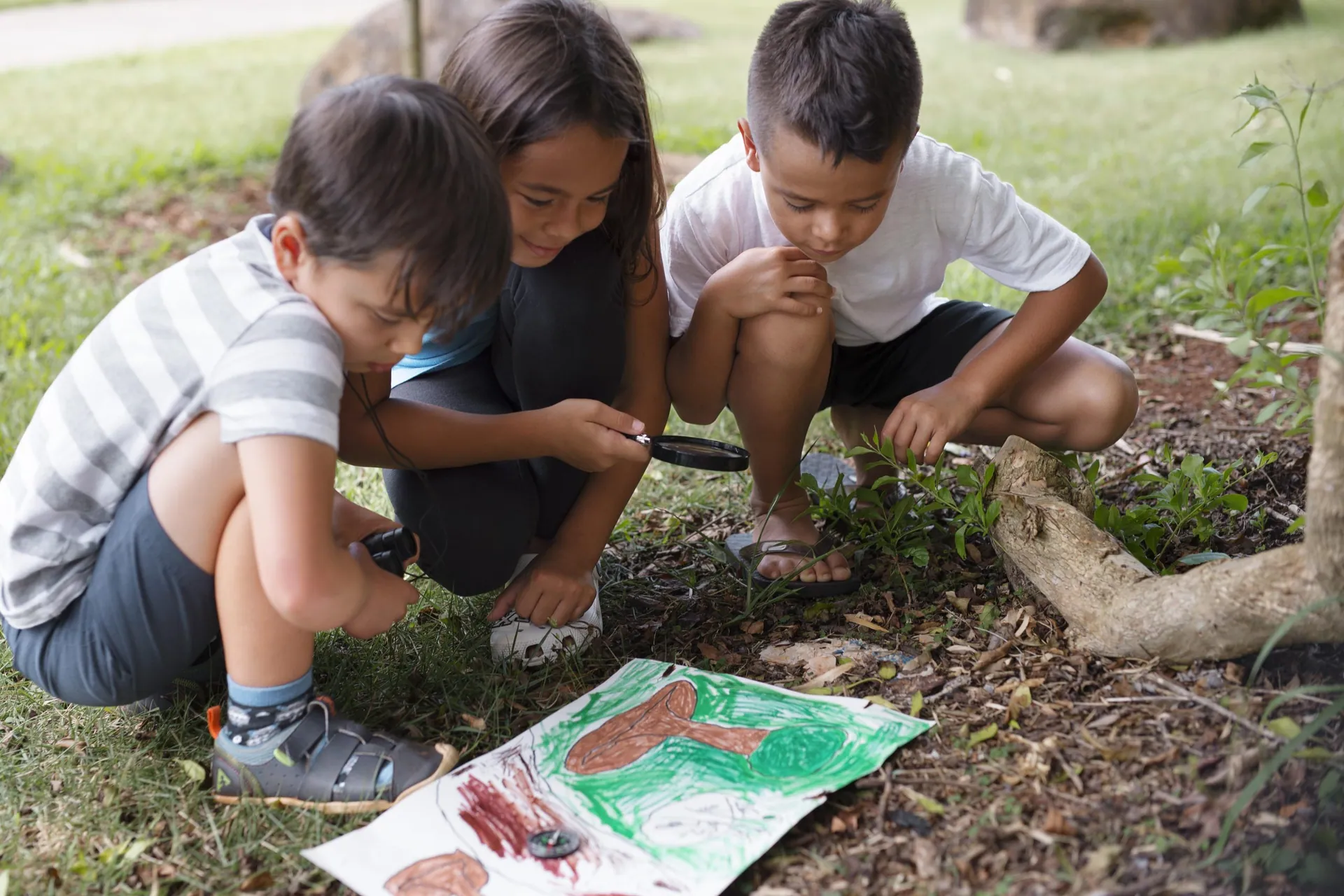
Children and teenagers can reverse the environmental impact with the help of innovative educational solutions. Learn about the opportunities entrepreneurs have to develop and implement them.
Today’s children are the future of humanity. Although they are still small, in the coming years they can create important changes in the environment, if from now on we foster in them care and protection of the planet through environmental education for children.
However, for them to become change agents, we need to give them innovative environmental education for children tools adapted to their abilities, skills, needs and the environment where they grow up. It is an opportunity for entrepreneurs, schools and social organizations to develop them.
Although environmental education for children is currently little served by edtech companies, in the future it could gain strength if we consider the increase in impact investment and social innovation for environmental solutions in recent years. “There is not a significant percentage of startups focused on childhood. Most are concentrated on the workforce, lifelong learning and higher education. But there are opportunities to innovate with environmental solutions in childhood,” says Sabrina Seltzer, director of Transfer and Entrepreneurship at the Institute for the Future of Education (IFE).
A valuable niche to start a business
But why is environmental education in early childhood and K-12 a good space to start a business? Let’s look at the opportunities that exist in Latin America for this type of solution and their potential as a business.
- Environmental problems
In the world there are big environmental challenges and needs that entrepreneurs can address. Some of these are climate change, land degradation, water scarcity, ozone layer depletion, toxic waste generation, natural disasters, loss of forests and species, as well as water and air pollution.
To get an idea of how serious this situation is, consider that climate-related problems and their impacts took more than 312 thousand lives in Latin America and the Caribbean, affecting more than 277 million people between 1998 and 2020, according to the United Nations (UN).
And that is not all. The UN warns that in the coming years Latin America will be one of the regions most affected by the impact of climate change, suffering heat waves and wildfires, with declining crop yields, depleted coral reefs and more intense extreme sea level events.
- A climate crisis that puts children at risk
Have you thought about how climate change and environmental degradation affect children, and the repercussions they will have in 30 years when they are adults? The United Nations Children’s Fund (UNICEF) determined that climate change is the greatest threat facing children and young people in the world. In fact, one billion children are exposed to suffering the consequences of this problem, almost half of the entire child population in the world today.
The ravages of this climate crisis are already showing in childhood. According to UN data, about 90% of the disease burden attributable to climate change falls on children under 5. And that is not all. More than half a million children under 5 die every year from causes related to air pollution.
According to UNICEF’s Children’s Climate Risk Index (CCRI), the countries where children are exposed to the most risks because of climate change and environmental degradation worldwide are:
- Central African Republic
- Chad
- Nigeria
- Guinea
- Guinea-Bissau
Meanwhile, in Latin America the economies where children are most vulnerable to the effects of climate change are:
- Haiti
- Guatemala
- Mexico
- Honduras
- Venezuela
Hence the need to implement programs, technology solutions, educational tools and other initiatives that help care for the planet, and so create a safe environmental setting for children.
- The market size is right
The early childhood and K-12 market is very large in Latin America, so you have the chance to reach a significant number of users. It is estimated that the region has 117 million girls, boys and teenagers of an age to attend initial, primary and secondary education, according to data from the United Nations Educational, Scientific and Cultural Organization (UNESCO) and UNICEF.
In early childhood alone there are 93 million girls and boys between 0 and 8 years old, which is 15.3% of the total population in the region. Mexico, Brazil, Argentina, Colombia, Peru and Venezuela are the countries where early childhood is concentrated, according to UNESCO figures.
- Growth in impact investment
Startups with sustainability actions and innovative solutions are now more attractive to investors. There is more and more impact investment, and participation of venture capital funds to drive solutions focused on environmental challenges, such as Deetken Impact, Promotora Social México, IMPAQTO Capital and Reach Capital, among others.
According to the IBM Institute for Business Value, six out of 10 investors include social or environmental impact startups in their investment portfolio. In 2021 alone, ESG investment focused on social, environmental and corporate governance impact projects reached record figures totaling 649 billion dollars, compared with 542 billion dollars in 2020 and 285 billion dollars in 2019, according to Refinitiv Lipper.
On this, Juan Jardon, investment officer at Deetken Impact, says he has seen notable growth in impact investment in Latin America and an interest in environmental solutions. He believes startups have a chance to be successful serving the children’s market with environmental education solutions, but warns that they may also face the challenge all edtech companies face in general: the return on investment is much slower than for other types of startups, and the risk is higher.
You should take this barrier into account if you plan to fund your company with venture capital investment, since investors normally expect a return on investment as quickly as possible. Another alternative that has been seen for funding this type of company is with support from government and foundations.
“On one side you have the government, which does not require a return on investment like a venture capital or private equity fund, but needs action on the environmental side. And on the other side you have the support of foundations with the blended finance model. That lowers investment risk,” says Jardon. “It is a way for them to put in the capital, but they already have this ‘skin in the game’ that makes it catalytic for the different impact investment funds,” adds the investor.
You may be interested in: Investment in childtech and edtech, venture capital funds for startups focused on childhood
- Support for entrepreneurs
In the educational startup and childtech ecosystem we have seen an atmosphere of collaboration between social organizations, foundations, government and entrepreneurs to implement technology and innovative solutions in public schools. Remember that the public sector is where the largest number of students in Latin America is concentrated.
Seltzer has seen that the most successful startups in childhood have one thing in common, and it has to do with the synergy they build with foundations and organizations as a way of reaching schools. “There are many foundations and organizations interested in these topics that have funding. They could help you fund getting these solutions to market,” says the specialist.
Seltzer also believes there is an opportunity for entrepreneurs to collaborate with startups from other verticals. For example, “startups that come from the cleantech area, or even with circular economy models, and edtech companies can collaborate to find a way to develop solutions for childhood,” says the specialist. It would be a great move considering edtech companies’ expertise in learning topics and green startups’ command of developing technologies for environmental challenges.
- Greater use of technology
Another of the opportunities is the internet connectivity in Latin America, which would make it easier to use digital learning platforms. As of 2021, more than 498 million inhabitants already had internet access, when 10 years ago the network barely reached 200 million people, according to Statista data.
Jardon sees a great opportunity to start a business in this niche not only because of internet connectivity, but also because children are familiar with mobile devices and look for the immediacy that technology provides. However, he warns that there is a risk that they will not be interested in caring for the environment. Why? “In the end, they will not see the effects of climate change on a screen, but in the rain, heat waves and natural disasters,” says Jardon.
So when you design and develop your educational product, consider the following: “It is important to think about how children will receive technical information, and that they stay aware of how they live and care for the environment in their day-to-day life, when they go to school or when they play in the park. That is where innovation will come from,” says Jardon.
- Conscious consumption
Seltzer believes that fostering a culture of conscious consumption is also a market opportunity. “We have not seen startup solutions or pedagogical proposals in childhood about how we teach children about conscious consumption,” says the specialist.
“We need solutions that make them think about what happens to the clothes we wear, where we buy them, how they are made and whether the brands we consume matter. Or when we shop at a supermarket, what happens to the product packaging, whether we can bring our own bags,” adds Seltzer.
According to NielsenIQ, 73% of adult consumers are willing to change their consumption habits to reduce their impact on the environment. What would happen if we instilled this mindset in children and teenagers from early stages? It would help reduce the carbon footprint they will leave over their lifetime, and they would learn to moderate their use of natural resources such as water and energy. We would also have good practices such as recycling, plastic reduction, waste management and reuse of products and materials.

Trends in educational solutions
What is the future of these companies and where are they headed? One of the trends and models to follow that we have seen in early childhood and K-12 education startups is the development of classroom management systems, teaching and learning platforms, interactive games, educational video games, science and environmental education, as well as chatbots using artificial intelligence. In general, these tools serve as support so that teachers can improve their teaching processes, students raise their learning quality and parents can reinforce their children’s learning and accompany them in the process.
It is the path that environmental education startups and social organizations in the United States and Europe are also following. However, these models would have to be adapted to the needs and environment of children and teenagers in Latin America.
Here are some environmental education solutions that are already on the market.
-
Green Kid Crafts: A company that offers eco-friendly, educational craft kits for children. They are designed to teach children about science and sustainability in a fun and creative way.
-
Tinkergarten: An outdoor learning platform for children from 18 months to 8 years old. Through its classes and activities guided by facilitators, children explore nature, develop social skills and learn about the environment.
-
Mystery Science: This educational platform provides project-based science lessons for primary school students. Its curriculum includes units on environmental topics such as water conservation, renewable energy and climate change.
The reality is that in Latin America the market for childhood environmental education startups is still emerging. Although, as we have said, it has a lot of potential to develop and there are great opportunities to make it happen. At Impactus we believe it will keep growing and can reach a level of maturity as happened with edtech. If you have an innovative technology solution that helps face environmental challenges and has a social impact, we invite you to leave your details in this form. We are looking for the most promising startups in the environmental education vertical. We want to meet you and have you be part of great surprises we are preparing.