Social Innovation in Latin America: The Engine That Accelerates Social Impact
7 min read Impactus Ventures

Learn about the landscape of social investment in the region and how it drives social innovation in organizations, startups and institutions to accelerate impact.
Social investment is gaining ground in Latin America. Although the ecosystem is still emerging in the region, more and more investors, nonprofit organizations, foundations, startups, entrepreneurs, and public and private institutions are leading impact investment initiatives to face the collective and environmental problems that affect the Latin population.
Historically, donations have been the most widely used funding vehicle for programs and projects with social and environmental purposes. However, financial support from impact investors has become an alternative for carrying out these initiatives and has gained strength in recent years.
From 2018 to 2019 alone, impact investors allocated more than 600 million dollars through 619 investments in Latin America, according to data from the Aspen Network of Development Entrepreneurs (ANDE) and IMPAQTO. So far, Latimpacto has registered 83 impact investors in the region, 60% of which are based on the continent.
A boost for social innovation
As a result of the momentum it is gaining, social investment has become one of the engines that drive and encourage social innovation in different forms and at different levels, in organizations as well as startups and institutions that make up the ecosystem.
Remember that, unlike traditional investments, impact investing, also known as venture philanthropy, seeks and prioritizes social or environmental benefit above financial return. It is an investment thesis that pushes players in the ecosystem to develop innovative programs, initiatives and solutions with social and environmental impact in order to access these resources and accelerate impact. In this way, social investment plays an important role in strengthening organizations, companies and ventures with a social purpose.
Why? It acts as a funding vehicle and a catalyst for innovation to impact the lives of people in vulnerable areas, and so achieve both the development of the region and the formation of fairer, more inclusive societies. In this sense, the World Bank considers in its report “New Approaches to Closing the Fiscal Gap” that social and infrastructure investment can become a key engine for growth and shared prosperity. Hence the need to increase the participation of impact investors together with philanthropy, nonprofit organizations, startups, and the public and private sectors.
The players that bring the ecosystem to life
Social innovation is not exclusive to any sector or person; it can come from public or private institutions as well as from an individual or from the academic and community world.
That is why today we have an innovation ecosystem made up of different players who, each from their own trench, contribute to solving the social problems that affect us.
According to the study “Social Investment and Impact: Cases and Trends in Latin America” by Latimpacto (2021), within this ecosystem we also find nonprofit organizations, which lead impact investment initiatives in the region.
Foundations are another of the players that drive social investment and impact, since they connect the public sector with the private sector. Traditional philanthropists, companies, multilateral and international cooperation organizations, and even some family offices also take part in the ecosystem. Academia and the public sector are the players that take part the least, although they have many opportunities to do so.
Considering that the challenges we face as a region are still big, we need projects with high social impact, so the growth and strengthening of the social innovation ecosystem in Latin America is everyone’s task.
5 cases of social innovation
Fortunately there are social organizations and startups working to meet the needs of the most vulnerable population, to impact the lives of millions of girls, boys, teenagers, young people and adults in the region.
Here are five success stories:
Fundación Mustakis - Planeta Mustakis
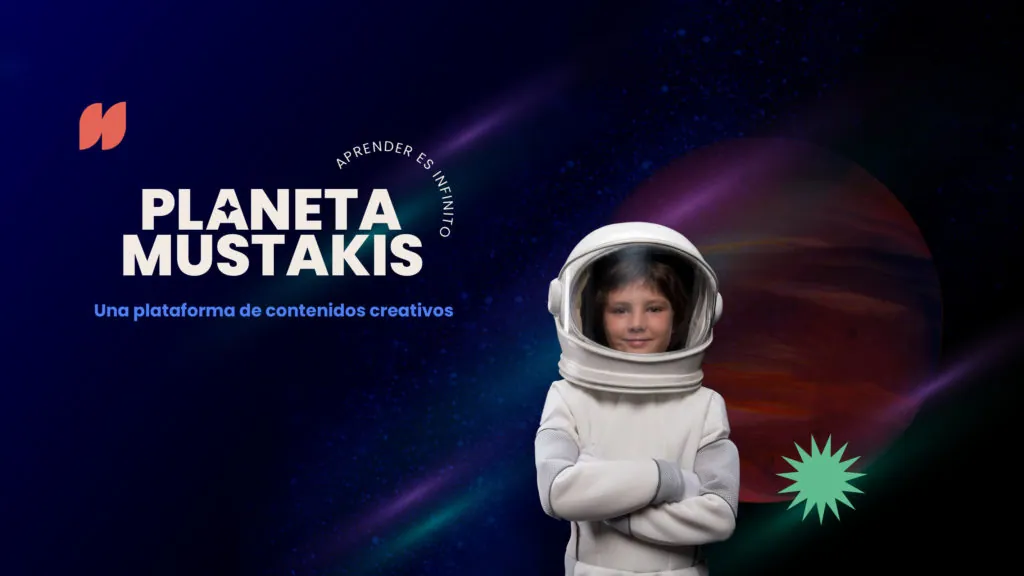
This organization bet on social innovation to improve the education of girls, boys and young people in the socio-emotional area.
Currently in Chile there is a tension between the suggestions the Ministry of Education gives Chilean teachers to address socio-emotional learning and the lack of time to implement them, as well as the lack of systematized material for applying them organically in lesson design and planning.
In response to this problem, Planeta Mustakis emerged, a virtual platform with more than 100 courses aimed at teachers to improve their practices and with educational resources that include curricular articulation sheets, linking each course on the platform with specific subjects and levels and CASEL competencies, sheets to encourage socio-emotional understanding and exploration, and thinking routines and/or implementation suggestions.
This project is innovative in that, by bringing ICT into the classroom, it allows the implementation of active methodologies such as “flipped classroom,” or hybrid experiences creatively designed by teachers based on the platform’s suggestions.
United Way Colombia - Living Lab

Laboratorio Vivo (Living Lab) emerged as an initiative of the UW Colombia team together with Dividendo por Colombia, with the hypothesis of working exclusively with the country’s teachers, understanding their role as mediators and multipliers of social impact in education. That is how the Bogotá living lab came about. However, in Antioquia they realized that having only the physical space in Bogotá meant an expiry date on the project’s success, since it could not be replicated in other regions. That is how the laboratory schools emerged in Antioquia, which seek to take that innovation lab and its methodology directly to institutions, creating an ecosystem that involved not only the living labs as a physical space but also the network of educational institutions that wanted to be a living lab directly from their own territories.
University of Talca - MOV

Social innovation does not come only from social organizations, but also from the academic world, and MOV is an example of this.
MOV is led by an academic at the University of Talca (Chile) and is a minimally invasive device that helps people with visual disabilities walk more safely and practically, using a band worn on the head. It leaves hands and arms free since a cane is not needed, and it makes it easier for people to get around.
The MOV sensory band works by taking advantage of echolocation, that is, it uses the small vibrations that objects emit, which are picked up by ultrasonic sensors at the auriculo-cranial area and the occipital bone (nape), making it possible to determine their location, either as monocular space (as if done by a single eye) or binocular (as if done by both eyes).
Afinidata
Latin American startups are also making efforts to combat the social problems faced by the Latin population. This is the case of Afinidata, a company that bet on good practices for caring for and raising children.
To do this it developed a virtual tutor, an artificial-intelligence chatbot, that recommends activities and games to caregivers, selected according to the evidence on early child development. The virtual tutor receives information about children’s development and uses algorithms to select the most appropriate activities to fit children’s needs.
Beereaders

After realizing that approximately 50% of Spanish-speaking children do not understand what they read, this company created an app and digital platform that improves reading comprehension skills for students between 6 and 18 years old.
The platform also gives teachers educational material and reports on their students’ performance, and lets parents get involved in their children’s education.
Although Beereaders is an example of educational innovation, they are currently developing projects with social impact as part of the ChildTech Challenge 2022, which lets them create social innovation through their solution as well.
Do you want to learn about more cases of social innovation? Subscribe to our newsletter and find out everything that is happening around social innovation and the childtech ecosystem.