Edtech Matific Won the 2022 Childtech Challenge and Consolidated Its Presence in Latin America After Taking Part in the Competition
5 min read Impactus Ventures

Social organizations and startups play an important role in the fight against poverty, the lack of access to education, poor socio-emotional development and other social challenges facing children in Latin America. The reason? They are helping girls, boys and young people have a quality life and better opportunities in the future, relying on social innovation and educational technology tools.
But they are not doing it alone. Fortunately, for some years now the region has seen an atmosphere of collaboration between edtech companies and social organizations focused on early childhood and youth, by bringing new educational technology solutions developed by startups into the programs and initiatives of these organizations, especially in vulnerable communities.
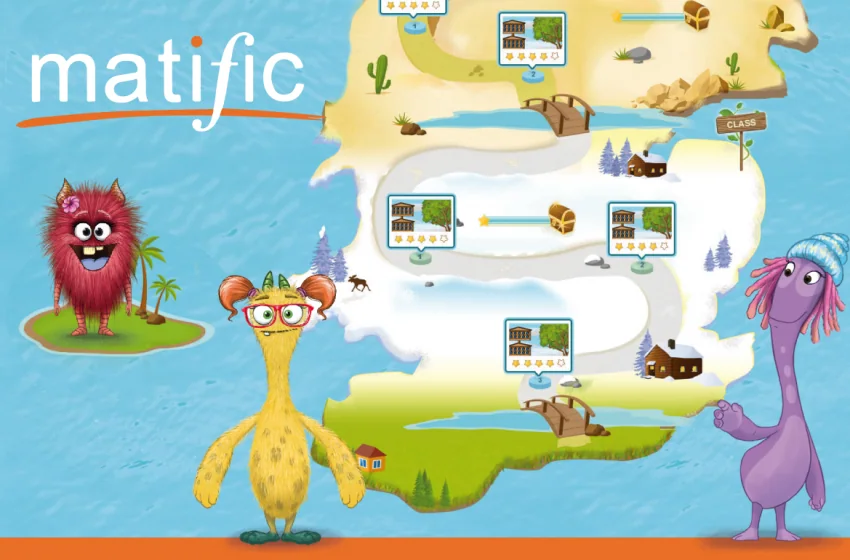
Learning math by playing
This is the case of Cafam, a social organization with 64 years of experience that implemented the educational platform of the startup Matific to learn math in four schools in Colombia, from the last year of preschool to sixth grade of primary school. This implementation was part of the prize received by the winning startups of the 2022 Childtech Challenge, where Matific was one of them and Cafam took part as an implementation partner.
This project, which also involved United Way Colombia in a coordination and liaison role, was a great success. So far more than 2,000 Colombian students actively use Matific. Cafam, United Way and Matific share a common purpose: that more children have access to quality education.
On one side, the Matific platform, founded by Raz Kupferman and Shimon Schocken in Israel, helps children and teenagers learn math in a simpler and more interesting way through educational games. The startup is now present in more than 120 countries. Best of all, teachers and children’s families can follow their progress and step in based on the results.
Cafam, meanwhile, has different educational programs from early childhood to higher education and continuing training, so that children, young people and teenagers receive quality education and food support. In fact, this organization has its own private schools and manages some public schools with its own educational methodology, which prepares students with the skills they need for the jobs of the future.
A successful integration
As you can see, Matific’s technology helps improve the educational quality that Cafam seeks in its early childhood and secondary schools. For this reason, implementing Matific was a great choice. In addition to offering a different, attractive and effective way to learn math with practical, everyday exercises, Carlos Castro, Technology Coordinator at Cafam, who led the implementation, believes it has let them assess students better.
“At the pedagogical level there is a very important input that the platform provides, and that is the data it produces in real time on student performance by content and skills,” says Carlos. “We can cross that data with the results we get from standardized tests and the assessment schemes we run internally. That way teachers can adjust topics to meet educational needs,” he adds.
This implementation began with a training process so that teachers, students and Cafam’s internal team could get to know the platform and see how it could be used in classroom activities. Students were also supported in creating their profiles on the platform, and parents were supported so they understood the value of this solution and the exercises for working at home.
Paula García, Partnerships and Projects Manager at Matific in Latin America, explains that to learn the platform’s impact on math learning, they ran a diagnostic assessment that identified where the biggest challenges were and which topics needed review, so they could work in a personalized way with each student in class.
From there, Cafam and Matific began working with the team of teachers and students on the implementation. So far 133,428 activities have been started and 65.7% completed. Best of all, according to Carlos, it changed the perception students’ parents had of the teaching and learning methodologies used at Cafam, and of how they help form better-prepared students.
“By modernizing classroom activities and implementing different teaching approaches, parents are calmer, and they realize that we do bring students closer to the needs of the future,” says Carlos. He also explains that this platform unified assessment criteria by generating statistics that make it possible to improve classes.
The tool also saves teachers time, since before they had to plan activities for a very large number of students. Now Matific automatically generates the educational activities thanks to the technologies it uses.
As you may have noticed, with the implementation of this educational innovation Cafam has raised the quality of learning among its students, thanks to the improvements Matific makes to teaching and learning processes in the classroom.
This is an example of what your startup could achieve if it is one of the winners of the Childtech Challenge 2023. The winning companies will also have the chance to implement their solution and accelerate impact in new markets with the support of social organizations. The call to take part is now open. Apply here!