Childtech Challenge 2023 Winners: Innovation and Technology in Education for Latin America
6 min read Impactus Ventures
The three winning ventures will have the chance to run their solutions in Colombia and Mexico, with the goal of helping solve social problems and scaling their projects internationally. This is how the Childtech Challenge 2023 reaffirms its position as one of the most important social innovation challenges in Latin America for startups focused on childhood and youth.
The Childtech Challenge 2023, the largest global social innovation call in Latin America for startups with high impact on childhood and youth, announced its winners. The call received more than 140 applications from companies in 15 countries across Europe, Oceania, Latin America and North America, including Chile, Mexico, Colombia, Peru, Ecuador and Australia. After a long evaluation process, the Childtech Challenge finalists were chosen. The jury was made up of leaders of nonprofit organizations with a long track record working for children and youth in Latin America.
Fundación Mustakis, through its +Global strategy, promotes the vision of collaborating and seeking global solutions to local needs. It joined other organizations in Latin America led by Impactus Ventures, which, together with United Way Mexico and United Way Colombia, organized the Childtech Challenge 2023. It is the largest global social innovation competition in Latin America for companies that are creating impact on childhood and youth by solving social problems such as the education gap and the deficit in socio-emotional development.
In its third year, the initiative looked for innovative science and technology-based solutions that could be implemented in Mexico and/or Colombia. Each challenge had a prize that consisted of a services contract to carry them out in those countries, thanks to the work of the connected network that brought this edition to life. These include Fundación FEMSA, Comunidar, Genesis Foundation, Fundación Riisa, Fundación Deacero, Fundación FRISA, HEB en la Comunidad, Fondo de Impacto Colectivo, Amalfi, Horkest and Fundación Xignux.
Leonor Merín, Director of Innovation and Territory at Fundación Mustakis, welcomed the announcement of the selected global change agents and the wide reach of the competition. “It is a pleasure to meet the winners of the Childtech Challenge 2023. Since 2020, Fundación Mustakis has been working at the regional level to attract organizations from other parts of the world to Latin America. We have seen how bringing top-level talent together around a common challenge produces deep change for our students, their families and their teachers. We know that applying collective funding strategies for ventures and social enterprises with high social impact helps us carry out our purpose, the Overall Development of People, in a more agile and effective way, sharing the risk of the process with our partners,” she said.
For her part, Carolina Arce, CEO of Impactus Ventures, said that “we firmly believe that access to world-class technology platforms, backed by exceptional methodologies and content, plays a crucial role in closing gaps in the fundamental areas we addressed in this challenge, such as the development of socio-emotional skills, wellbeing and STEM topics. Each of the projects presented stands out for its innovation, both at the community level, as shown by initiatives aimed at refugees in Mexico, and in the way they approach these challenges. For example, the use of Artificial Intelligence to boost educators’ wellbeing, or teaching teachers and students to use generative Artificial Intelligence, represents a revolution in how we teach and learn. We are very proud that these innovations are within reach of vulnerable communities, and we celebrate the entrepreneurs and the leaders of the organizations that will carry out the implementation throughout this year.”
Challenges and more about the winners
This year winners were chosen in three of five challenges:
- Promoting STEM teaching, learning and prototyping with a focus on rural settings in Colombia
- Strengthening socio-emotional skills in refugee and mobile families in Mexico
- Developing socio-emotional skills in early childhood center professionals in Colombia
The other two categories, “Building a sustainable future through recycling and environmental education for students of all ages” and “Developing autonomy and independence skills in children and young people with intellectual disabilities,” are still looking for transformative startups that can create change in society.
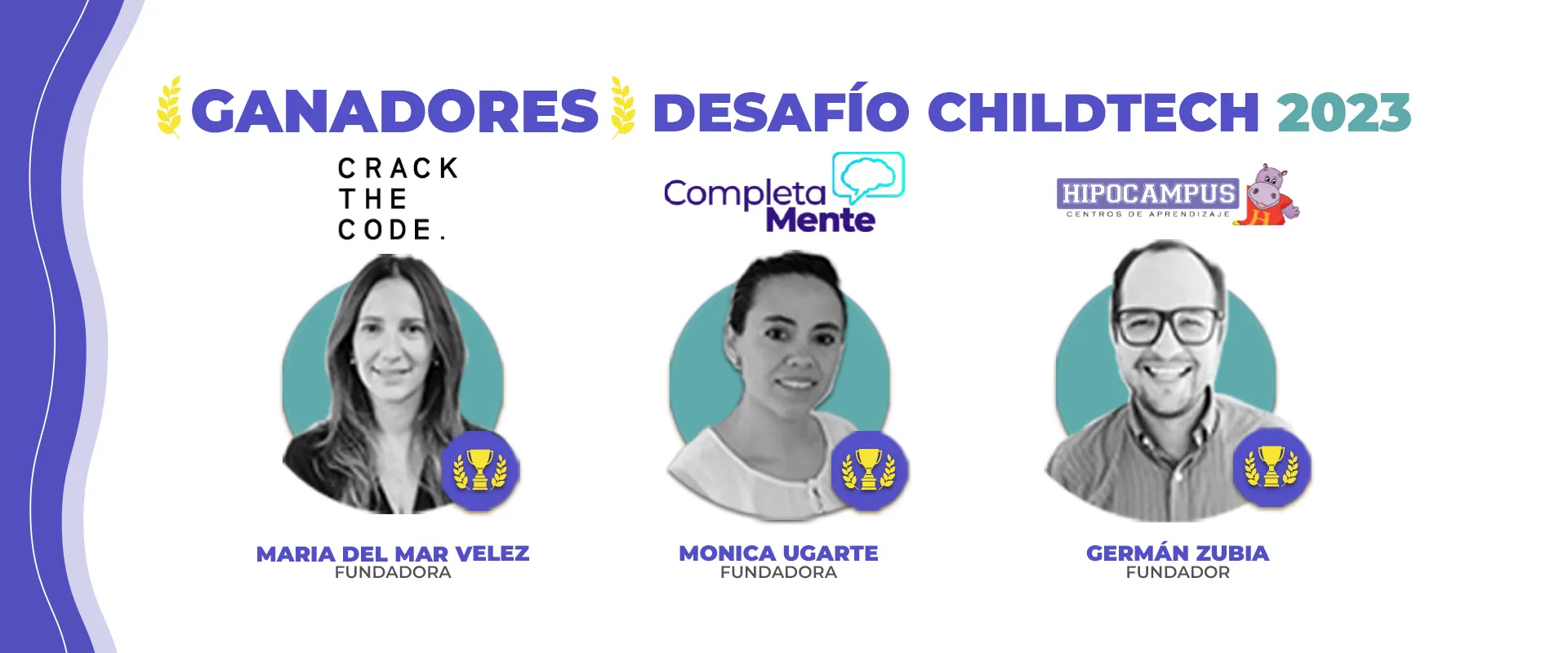
Meet the 3 winning companies:
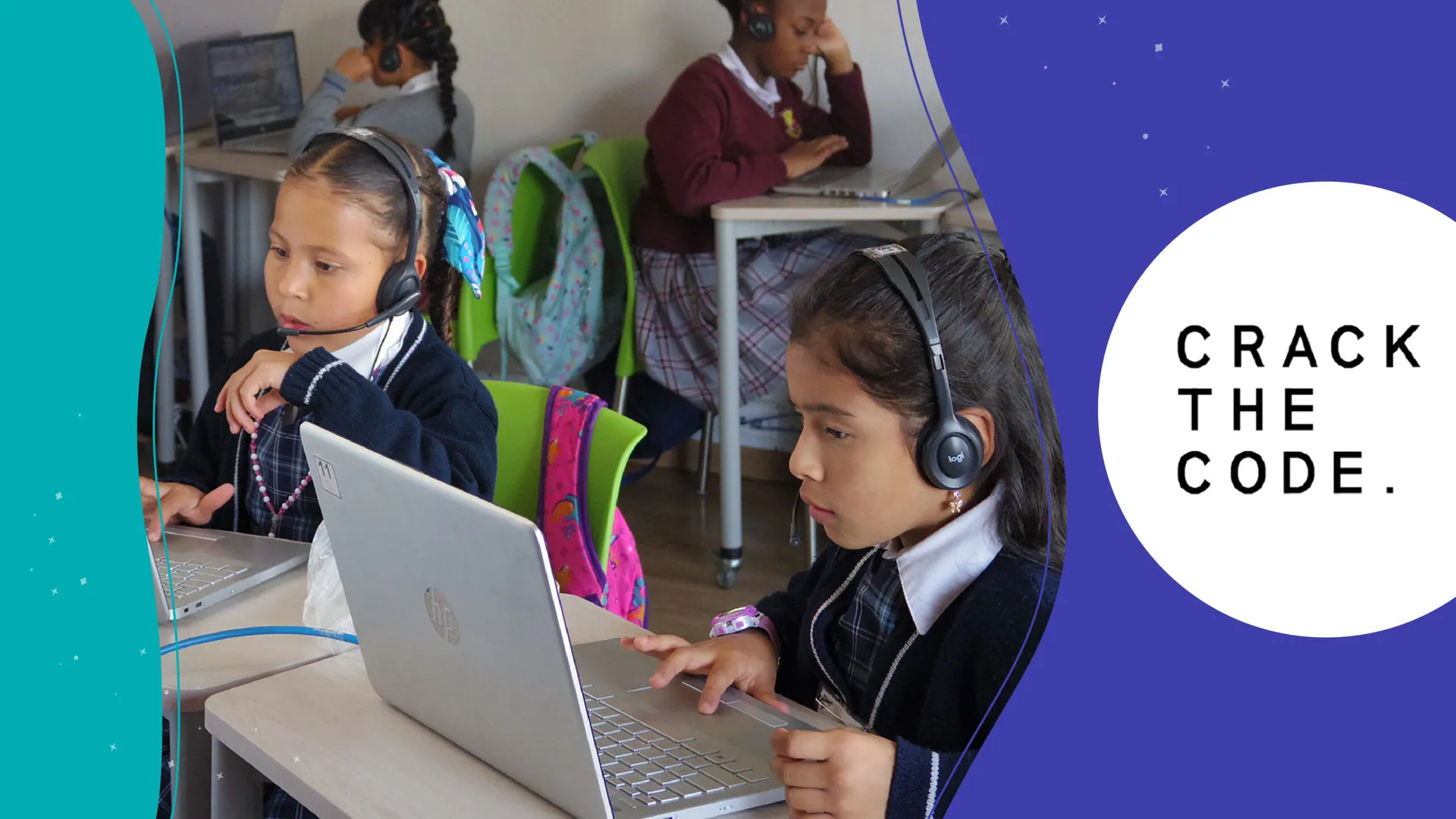
Crack the Code is a Peruvian startup that offers programming and technology courses for children with two special focuses: game tools and independent problem solving. The startup won the challenge “Promoting STEM teaching, learning and prototyping with a focus on rural settings in Colombia.” Its educational and technology platform trains educators in robotics skills through a virtual simulator, programming and artificial intelligence.
Hipocampus is the winning company of the challenge “Strengthening socio-emotional skills in refugee and mobile families in Mexico.” Its educational method adapts to each child’s learning pace and to their physical, emotional and cognitive conditions. It offers a solution that provides digital support through WhatsApp, with an artificial-intelligence chatbot and learning communities that use microlearning.
Completamente is the winner of the challenge “Developing socio-emotional skills in early childhood center professionals in Colombia.” It offers mental health tools and technology methods to measure people’s overall wellbeing, with a 360 wellbeing platform based on data, artificial intelligence and personalized support through a chatbot. Its system makes assessment, support, guidance and psychological referral processes easier.
As part of the award, these companies will receive US$20,000 and the opportunity to implement their platforms in two Latin American countries. The winners Crack the Code and Completamente will do so in Colombia, with the support of Corporación Educativa Minuto de Dios, and Hipocampus will do so in Mexico, with the support of Vía Educación.
The Childtech Challenge will keep looking for technology solutions for two challenges. The first challenge is “Building a sustainable future through recycling and environmental education,” and the second is “Promoting autonomy and independence skills in children and young people with intellectual disabilities.” A new call for applications will open very soon for startups, social enterprises and nonprofit organizations that want to apply. Here you can read more details about each challenge.
Together with Fundación Mustakis, this initiative had the support of other allies such as Fundación FEMSA, Comunidar, +Global, Genesis Foundation, Fundación Riisa, Fundación Deacero, Fundación FRISA, HEB en la Comunidad, Fondo de Impacto Colectivo and Fundación Xignux. In previous editions, the Childtech Challenge has had a positive impact on more than 20,000 young people, parents and educators across Latin America.