10 Startups Changing the Future of Teaching with Educational Technology
9 min read Impactus Ventures
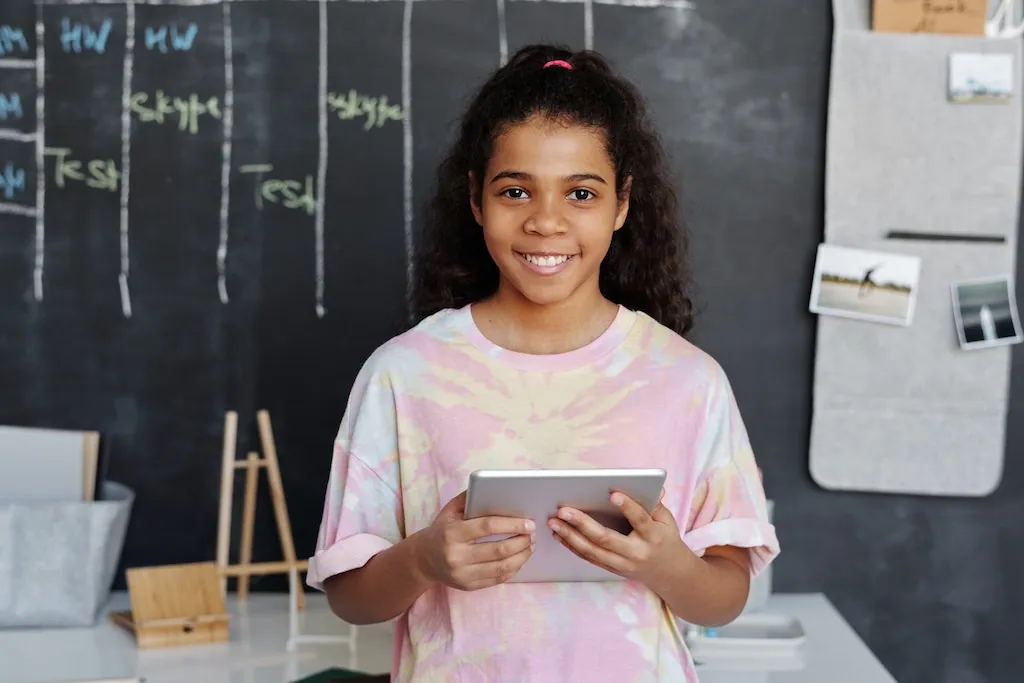
These companies developed educational technology solutions to make learning more efficient, practical and affordable.
The most successful companies today have one quality in common: they use digital technologies to add value for users. This is the case of EdTech startups, which are characterized by developing innovative solutions with educational technology to raise the quality of learning in childhood, adolescence and youth.
These companies are reinventing, with educational technology, the teaching methods and tools that were obsolete for decades. Now entrepreneurs apply digital technologies such as virtual reality, gaming, artificial intelligence and robotics to digitize education and reduce the learning skills gap.
Technology at the service of education
Technology gives us the chance to make teaching more efficient, practical and affordable. For example, thanks to artificial intelligence it is possible to automate educational activities, learn from student performance to identify strengths and areas of opportunity, and give feedback to both parents and teachers.
Gaming is another technology that encourages students to take part in different tasks, since it lets them learn through play, even in virtual scenarios. In this way, video games have become an educational resource to refine learning techniques.
Robotics is also gaining strength in education and, like gaming, is based on the philosophy of learning by playing. One of its strengths is that it awakens creativity in a more enjoyable and attractive environment for children, and even encourages interaction with virtual characters and the development of science and programming skills.
Virtual reality, for its part, makes it possible to learn with the help of activities in simulated environments and immersive experiences. This technology’s potential in education rests on three pillars: realism, interaction and experimentation.
These technologies applied in education immerse students in a hands-on, interactive learning dynamic and raise their interest in learning different topics. They also strengthen interaction with teachers and parents, and students’ commitment to learning.
Latin American EdTech in investors’ sights
At the business level, this type of technology has two big benefits.
The first is that it makes it possible to create scalable business models and have greater reach in number of users, even globally. The second is that technological innovation is part of the investment thesis of venture capital (VC) funds.
Among the attributes or characteristics VCs look for in startups in order to invest in them, whether at early stage or growth stage, is implementing technology in the business model, product or value chain.
Investors such as Softbank, Tiger Global, Sequoia, Kaszek and Wayra look for technology startups to drive their growth with private investment. Wayra alone, Telefónica Movistar’s investment fund, has a cumulative pool of 20 million dollars this year for technology and innovation startups around the world.
In Mexico, technology such as robotics, information technology, artificial intelligence and others was one of the sectors with the most venture capital investment in 2020, with growth of 70% compared with 2019, according to Transactional Track Record (TTR) data.
Technology education startups also attract venture capital investors, thanks to their innovative digital education models and their potential to grow.
In Latin America alone, VCs allocated around 299 million dollars to EdTech startups in the first half of 2021, according to Holon IQ data. Globally, this sector received 20.8 billion dollars during the same year, through more than 1,500 investment rounds, according to Holon IQ figures.
In fact, before the pandemic, only 4% of private equity investment went to educational technology startups, according to LAVCA figures.
But what explains the success of these companies? Entrepreneurs are betting on technological innovation to address the needs the Latin population faces in education.
As proof, in early childhood education, 3.6 million children aged 3 to 4 do not have early development appropriate for their age, and only 6 out of 10 children aged 3 to 4 receive education at this stage, according to UNICEF figures.
Edtech companies that use gaming, augmented reality, artificial intelligence and robotics
Here are 10 startups that are creating change in the education of girls, boys, teenagers and young people with the help of technologies such as gaming, augmented reality, artificial intelligence and robotics. Get inspired and dare to start a business in this sector.
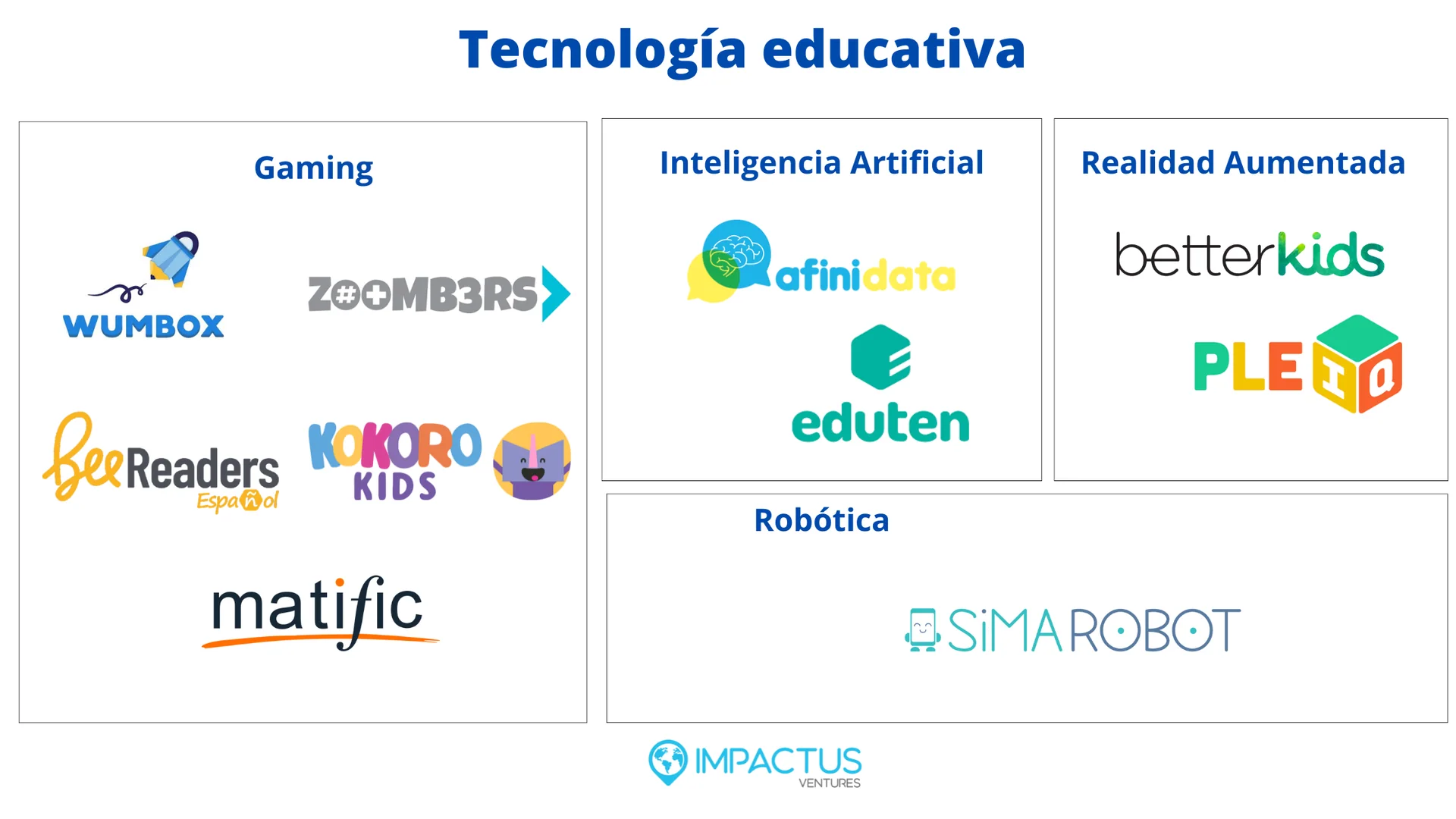
GAMING
Wumbox
Adaptive, personalized game-based learning platform. It contains a catalog with thousands of educational, interactive resources that teachers can use to teach their students. It measures user interactions in real time and adapts its proposals to children’s needs.
- Technology used: Gaming, big data and artificial intelligence.
- End users: Early childhood (0 to 5 years), children (6 to 12 years), mothers, fathers, caregivers, schools, educators and school principals
- Country of origin: Argentina
- Founders: Agustín Pardo Van Thienen, José Ignacio Illi and Victoria Bianchi di Carcano
Zoombers
Platform with educational math video games for primary school students and teachers. This tool helps students reinforce their learning and teachers improve their teaching method. Thanks to its technology, it tracks student performance closely to learn their strengths and the skills they need to improve.
- Technology used: Gaming and artificial intelligence.
- End users: Children from 6 to 12 years old, educators and school principals.
- Country of origin: Mexico.
- Founders: Juan Carlos Elizalde and Pamela Elizalde
Beereaders
Platform for students and educators with a library of original content that includes educational books and texts in Spanish. It helps students improve their reading comprehension through challenges and rewards. It promotes literacy skills using adaptive learning in a game-like environment.
- Technology used: Gaming
- End users: Children from 6 to 12 years old, teenagers over 13, mothers, fathers, caregivers, educators and school principals
- Country of origin: Chile.
- Founders: Ruben Arias and Luis Gringras
Kokoro Kids
This is an app that lets children learn in a fun way through hundreds of games, educational activities, stories and songs. It uses concepts and tasks that complement school or preschool activities. The tool lets parents check their children’s educational progress.
- Technology used: Gaming and artificial intelligence.
- End users: Early childhood (0 to 5 years) and children (6 to 12 years).
- Country of origin: Spain.
- Founder: Carles Pons.
Matific
Educational platform that uses game-based principles to encourage students to learn through discovery, all aligned with school curricula. It has more than 2 thousand interactive activities, worksheets, workshops and assessments to keep students engaged, both at school and at home.
- Technology used: Gaming
- End users: Early childhood (0 to 5 years) and children (6 to 12 years)
- Country of origin: Australia.
- Founders: Raz Kupferman and Shimon Schocken.
ARTIFICIAL INTELLIGENCE
Afinidata
A chatbot that gives mothers and fathers educational activities to improve their children’s development. Parents can chat with the virtual assistant called Afini, and with the help of an algorithm, it learns from each child to suggest the best activities and content.
- Technology used: Artificial intelligence.
- End users: Early childhood (0 to 5 years) and children (6 to 12 years).
- Country of origin: Guatemala.
- Founder: Andreana Castellanos.
Eduten
A math educational content platform that includes more than 200 thousand gamified tasks adapted to curricula. It uses data from students’ answers to adapt and personalize the learning experience, calibrate difficulty levels and give teachers learning analytics on their students.
- Technology used: Artificial intelligence.
- End users: Children from 6 to 12 years old, teenagers over 13, educators and school principals.
- Country of origin: Finland.
- Founders: Marta López de Mäkinen, Henri Muurimaa, Erkki Kaila and Makke Leppänen.
AUGMENTED REALITY
Better Kids
Game-based socio-emotional learning app for children with interactive games, augmented reality exercises and educational activities. With this solution, children have fun and learn to develop five competencies: self-awareness, self-management, social awareness, relationship skills and decision-making.
- Technology used: Gaming and augmented reality.
- End users: Early childhood (0 to 5 years), children (6 to 12 years), mothers, fathers, caregivers, educators and school principals.
- Country of origin: United States.
- Founder: Ondine Bullot.
Pleiq
Interactive learning app with smart books that come to life by scanning the pages with the technology itself. This product focuses on learning in eight areas: linguistic, logical, naturalist, visual, musical, kinesthetic, intrapersonal and interpersonal.
- Technology used: Augmented reality.
- End users: Early childhood (0 to 5 years), children (6 to 12 years), mothers, fathers, caregivers, educators and school principals.
- Country of origin: Chile.
- Founder: Edison Duran.
ROBOTICS
Sima Robot
It is made up of a robotic body that, together with a smartphone, through an app lets students interact with the robot through gestures and voice, both in classrooms and at home. This robot plays the role of a co-educator and can give instructions and set the pace for carrying out educational activities.
- Technology used: Robotics and artificial intelligence.
- End users: Early childhood (0 to 5 years) and children (6 to 12 years).
- Country of origin: Chile.
- Founders: Virginia Días and Felipe Araya.